Programme · November 3–5, 2026
A draft schedule is below. The final agenda will be confirmed closer to the event, and will feature scientific talks, breakout sessions, contributed talks from the community, hack sessions, and opportunities for collaboration.
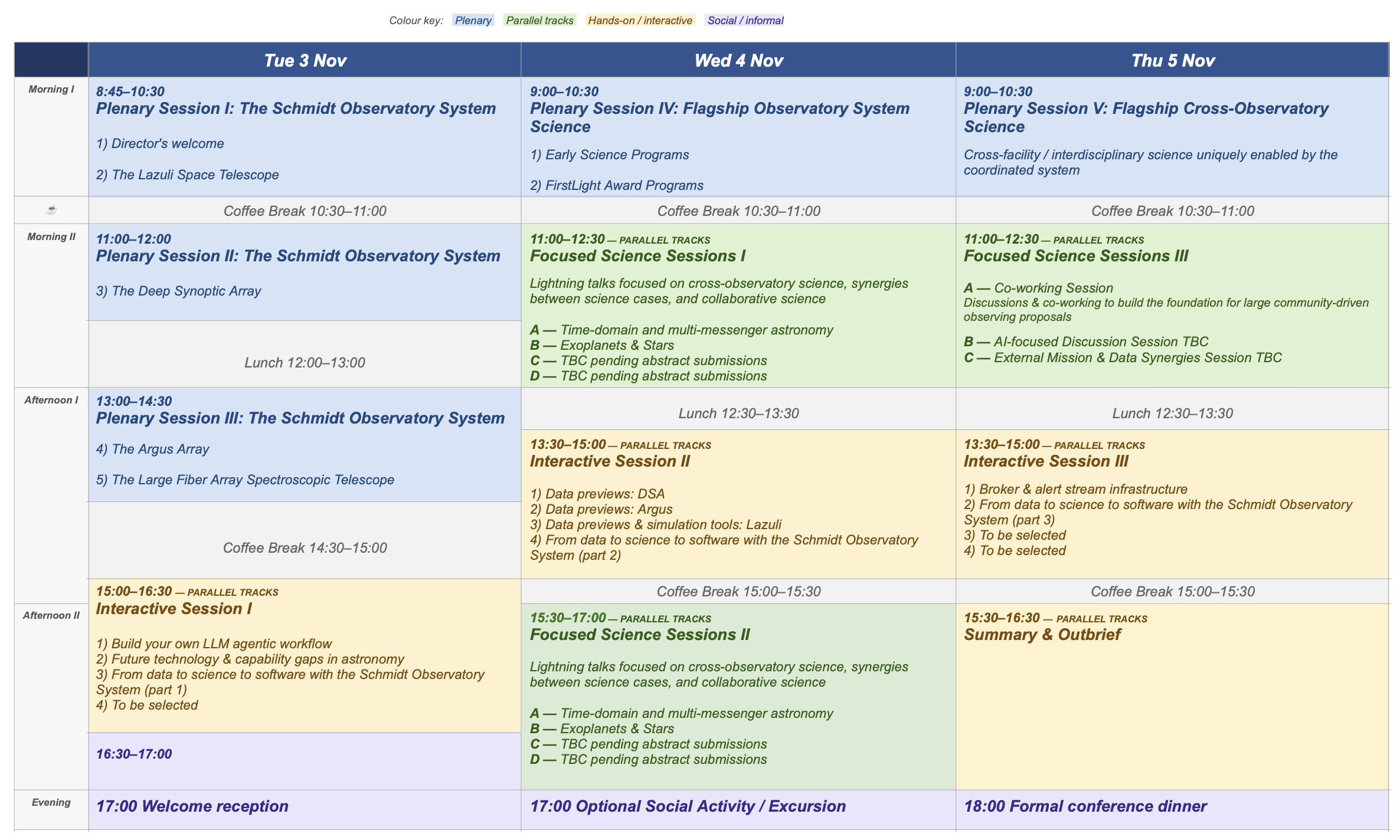
The inaugural Schmidt Observatory System Symposium will bring together astronomers, instrumentalists, and data scientists to explore the science enabled by a new generation of coordinated observatories. Sessions will broadly span topics from technical orientation to ambitious science planning — introducing the capabilities of each facility, demonstrating tools and simulators, and starting the collective work of defining the large-scale observing programs that will define the system's early science legacy. The format is deliberately interactive: alongside plenary talks, expect hands-on hackathons, focused breakout discussions, and working group sessions designed to turn ideas into the seeds for proposals.
A central theme is the power of cross-observatory science — what becomes possible when DSA, Argus, Lazuli, and LFAST operate as a coordinated system rather than independent facilities. Significant time will be dedicated to the practicalities of community access: how time is allocated, how proposals are structured, and what tools are available to help you plan observations and write competitive programs. Whether you are scoping a future proposal, looking to connect with collaborators, or simply want to understand what the Schmidt Observatory System makes possible, this symposium is your gateway.
 Science